Lisp Press

Lisp Press, which I founded in 2011 to publish my own artist books will, over the course of the summer, transition to publisher of Decadent and Symbolist literature and criticism. I will announce titles as they become available. The first scheduled is Arthur Machen’s The Hill of Dreams.

Bananas

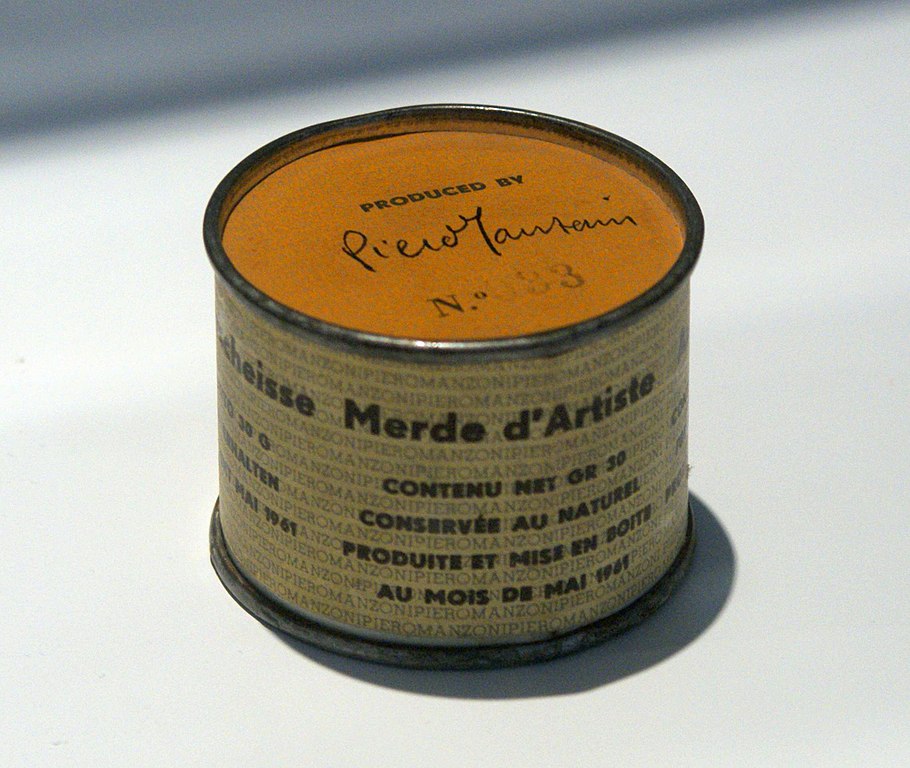
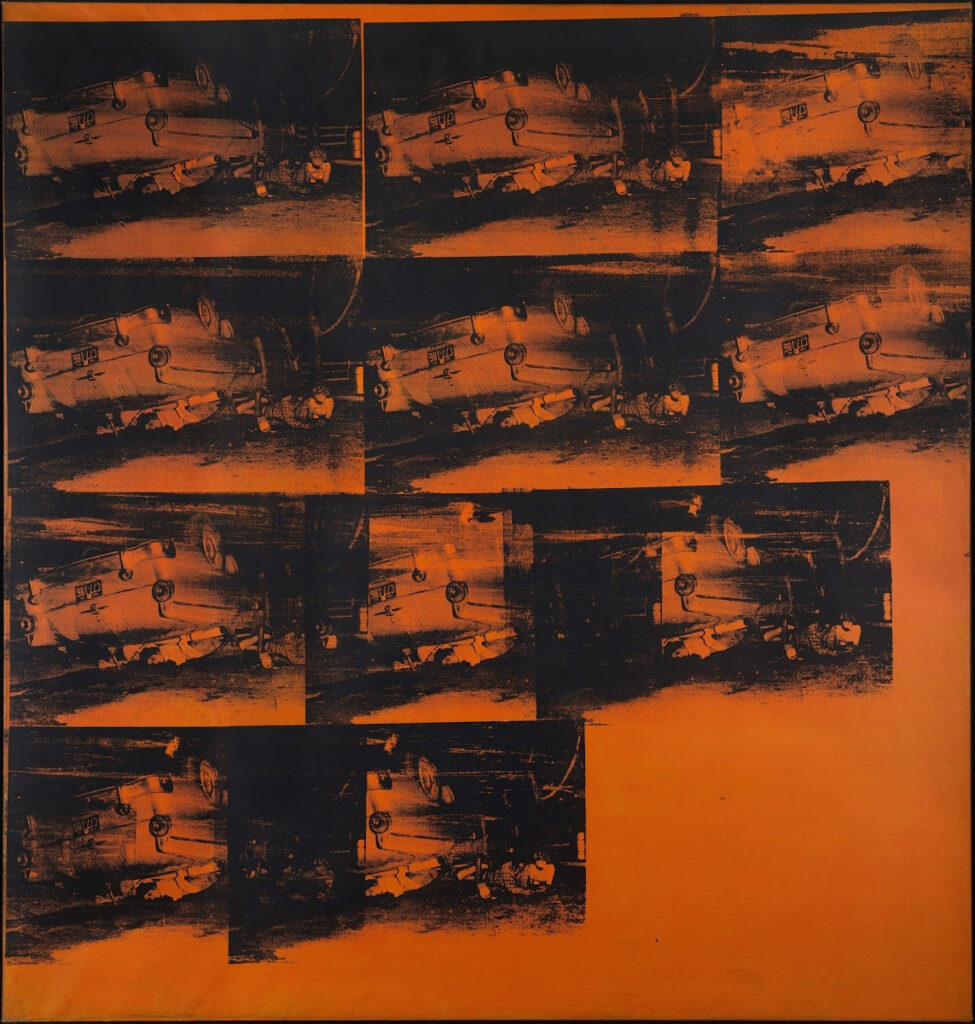
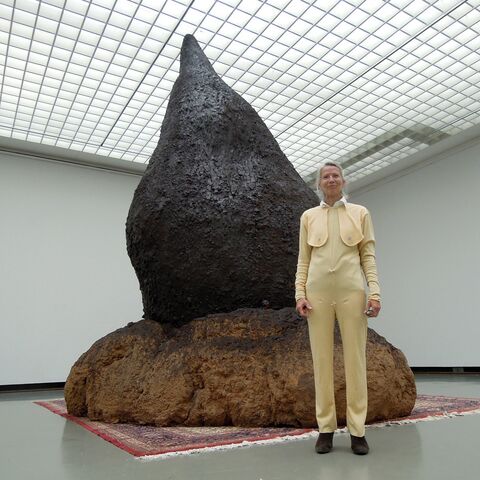
The Dadaist breakdown of the distinction between “art” and “nonart,” and the subsequent mutation of Dada into Pop did not “democratize” art. It magnified the power of the institutional gatekeepers. When someone duct-tapes a banana to a wall and calls it art, validation depends on the assent of these high-placed arbiters. Such gestures have always been expressly designed to offend common sensibility. Antiart manufactures uncommon art. The purpose of uncommon art is to make its consumers feel uncommon. It is no coincidence that Warhol’s arrival coincided with the arrival of the hipster and what Miles Davis called the birth of the cool.

The myth of an anti-bourgeois avant-garde hides the collusion of the avant-garde with its bourgeois patrons to create a new class of luxury goods with no intrinsic value other than their snob appeal. The very notion of an avant-garde was always misleading. The avant-garde did not lead, it followed. It supplied what the bourgeoisie, a new upstart class, needed to mark its cultural ascent.

When the bourgeoisie was revolutionary and heroic, avant-garde art was revolutionary and heroic. When the bourgeoisie degenerated and spawned feckless ninnies, the avant-garde degenerated with it. We call this postmodernism.

Power Chord

Anyone whose overriding craving is for power cannot enjoy art because art is humbling not empowering. The experience of art is similar to the experience of the sacred: it demolishes the ego, it kicks your feet from under you. Like religion, which art faithfully served from the moment of their entwined origin, art is a means of transport.

There is no question that in order for canons to be renewed they must at various intervals be upended. But that upending must be at the hands of newer, more vigorous artists whose destructive gestures release a living tradition from the dead encrustations strangling it. Academic canon-busting is something else altogether because it issues from a neurotic hatred of what the bureaucratic intellect cannot apprehend or circumscribe.

Art survives now by disguising itself as something too dumb to be taken seriously.

Tower of Babel

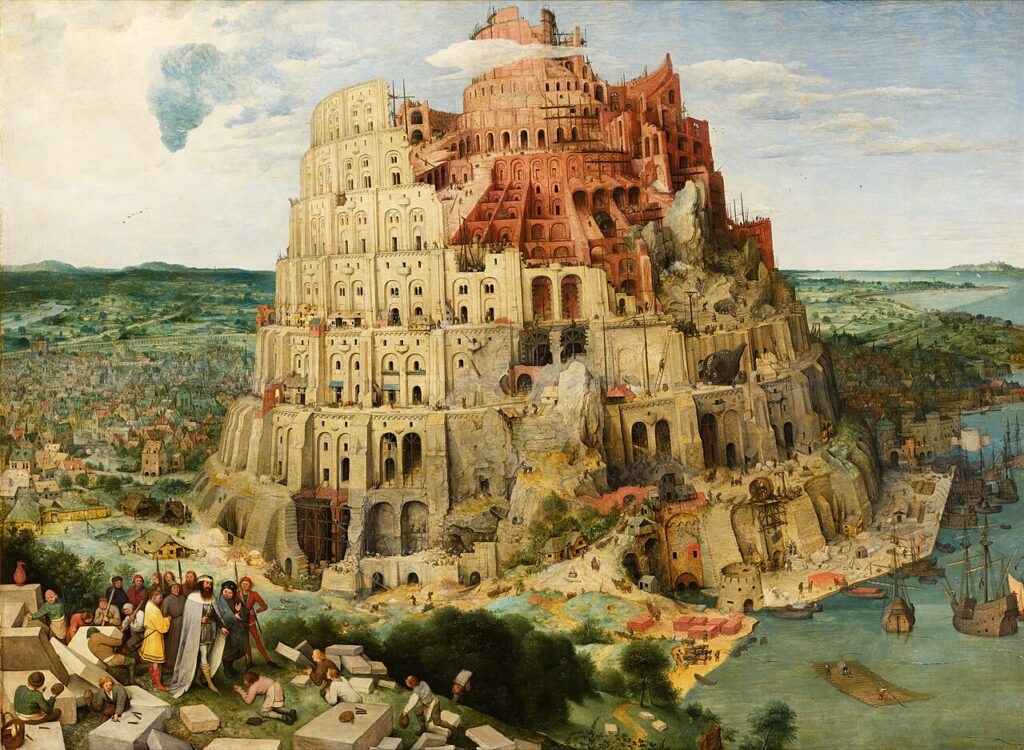
Pieter Bruegel the Elder, The Tower of Babel, 1563

The story of the Tower of Babel should be understood as a story about the foolishness of attempting to achieve metaphysical elevation by physical means. 

Transhumanism is another Tower of Babel. Technology cannot grant transcendence.

Becoming superhuman, becoming shaman, is a process of subtraction not addition. It is an ordeal. To become spirit, the prospective shaman must first experience death. Only then can he visit the heavens and the underworld. Cyborgs cannot do this.

Unplugging

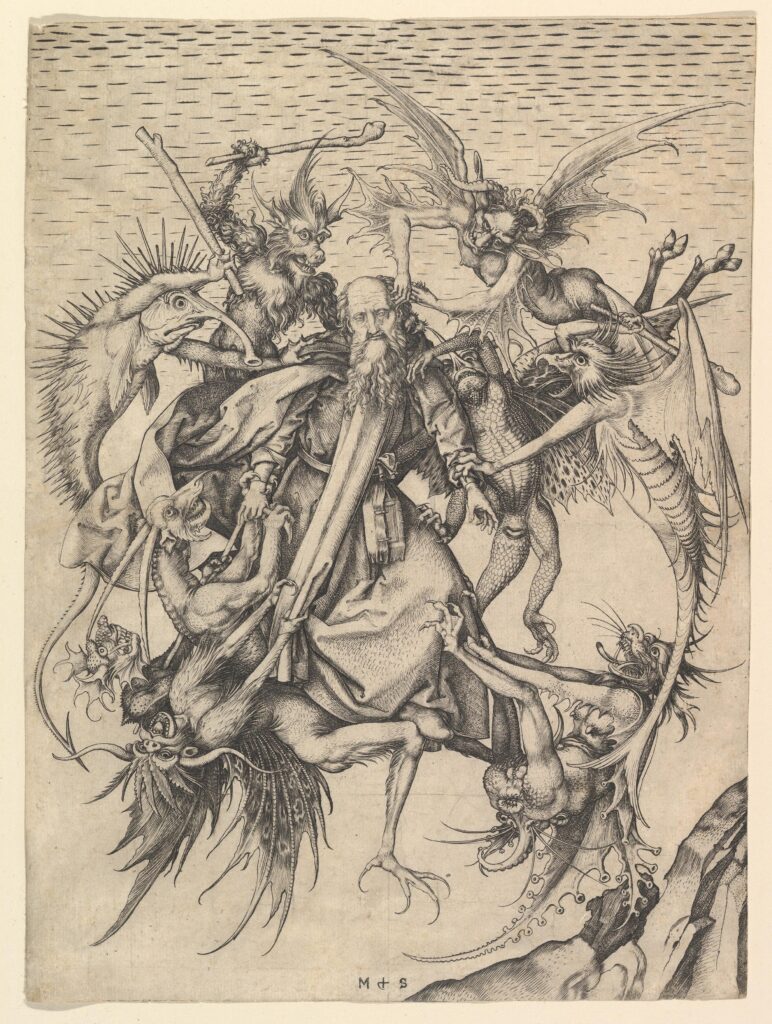
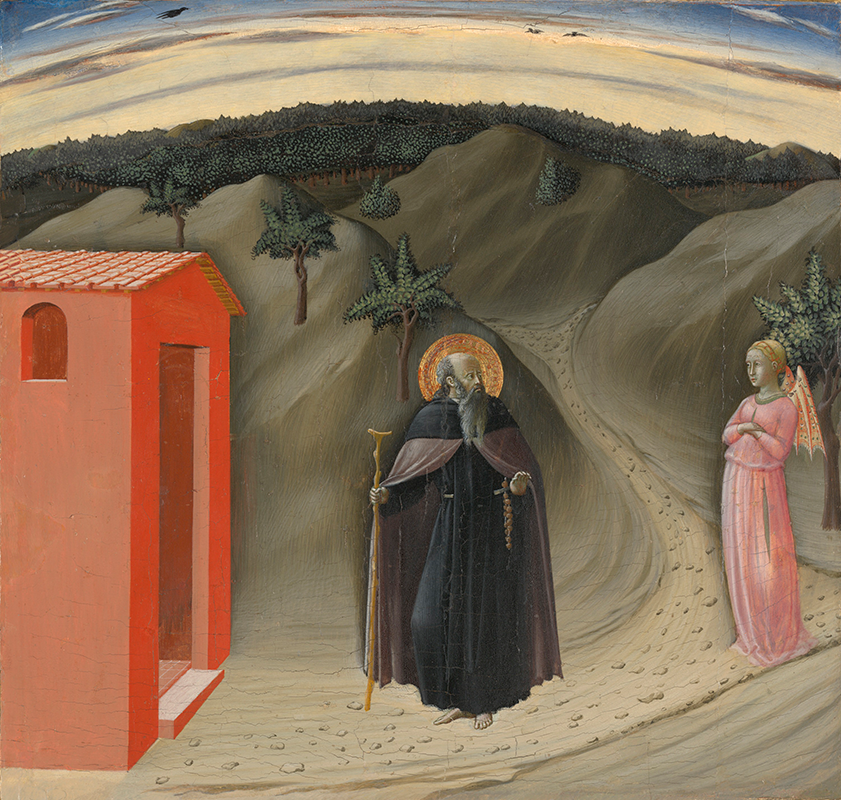
Martin Schongauer, The Temptation of Saint Anthony c. 1470–1475

As I start my severely restricted internet diet, some thoughts.

Media is fundamentally evil. The “news,” whatever the source, trains you to be passive. What others are doing/deciding takes precedence. You are just a spectator.

The world seen through media is an inversion of your existence. You should be absorbed in the the things that you can and should manage. You should be attentive to and deriving satisfaction from mindfully doing everyday things like making a meal, taking a walk, or playing with the dog. Or just breathing. These are the important things. But instead, you are caught up and vicariously living off the drama purveyed by media, which solicits your opinion about everything.

Of course, you do this because you want to escape from the mundane. But there is a feedback loop here, as in all addictive behavior. You want to escape the mundane because your exposure to media has desacralized and diminished the mundane. You have been seduced by the idea that the big reality is over there, in the virtual space of online chatter. Your own immediate sensations and surroundings have been emptied of significance. The immediate has become unreal. You recoil from it. You treat it with contempt. The immediate is an encumbrance you must shed so you can focus on the real issues of the day, which are whatever it is that agitates the social media mobs. Social media immerses you in the imaginary. You regress into the hysteria of identification. (All talk about what you identify as is just that, hysteria. In a sane society, you are what you do, i.e. what makes you useful to others, not what you hallucinate.)

Once your contact with the immediate is broken, your craving for the mediated intensifies exponentially. People talk about porn addiction. But addiction to porn is merely the most garish form of addiction to media. Porn is the ultimate form of hysterical sexuality, where imaginary relations have completely displaced actual social intercourse. But the idolatry of the imaginary (and the corresponding devalorization of the immediate) is the essence of media spectacle in general. Mass media is mass onanism. Everybody on social media is jerking off.

Media critique, an obsessive academic practice, does not address this problem. It amplifies it, adding chatter to chatter.

To regain any kind of autonomy and respect for your own authentic way of being in the world, a radical disengagement from media is necessary. You have to impose a strict purge. Meditation helps. It makes you aware of how much foam there is in your head, how much of what you think of as self is a tissue of knee-jerk responses to media provocations. Taking a “position” on every media-fabricated event is how you condemn yourself to a lifetime of impotence.

Say Yes to Heaven

I’m not interested in the manic pursuit of (pseudo)novel form. For me it is enough that something—even something that started as an infatuation—turns into a trend to become gross and despicable. The mania for novelty subsumes great deal of what passes for contemporary art into an abject sub-genre of crass consumerism pandering to the vapid appetites of hedge fund managers.

Beauty is not the same thing as eye candy.

For the relatively brief period when abstraction cast a spell, it was because it expressed a desire for transcendence. A desacralized abstraction is of no interest to me. For eye candy, you’re better off going to the mall.

I’m interested in poetic form, form anchored in a symbolic universe. Ideally, it should be form that in some way, perhaps in a very subtle way, engages with traditional forms.

I am drawn to repetition, but repetition can mean different things in different contexts. In Warhol it means banality. The repetition that interests me is the repetition found in rhythm, song, and prayer.

I discovered poetry through the Surrealist poets and their idea of the marvelous. Nowadays I’m more at home reading Cavafy. In any case, the thing that I discovered in poetry is the magic of words. We use words all the time. They are a debased currency. But in poetry (and song) words become mystical incantations. They produce vibrations that transport the soul to heaven.

Art is a step toward ecstasy.

Wasteland

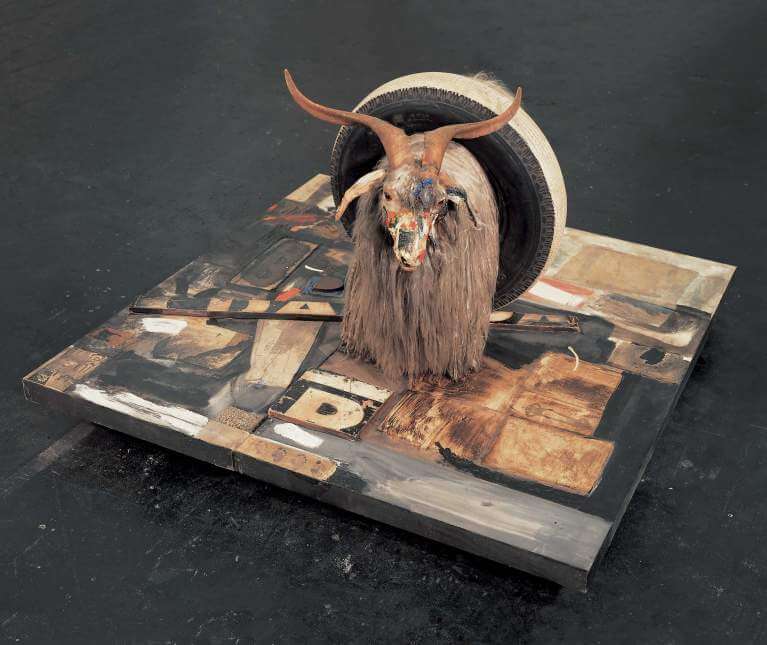
Robert Rauschenberg, Monogram, 1955-59

When what were formerly existentially significant modes of being in the world are reduced to “lifestyles,” then a postmodern diversity does indeed become possible. For then everything can coexist with everything without generating conflict or tension in the same way that the corpses of men who were enemies in life can happily coexist in a cemetery. 

In art, Rauschenberg’s Combines embody this enervated diversity of used-up dead things.  If we could all play dead, we would be able to get along as fabulously as the stuffed goat and the tire.

Marx as Conservative

Marx’s hatred of modernity is, I think, insufficiently appreciated.

“Everything solid melts into air, everything holy is profaned . . .” he declared in the Communist Manifesto.

No contemporary conservative mindlessly prattling on about the toxicity of “cultural Marxism” can fathom the revulsion against modernity that colors Marx’s writing from beginning to end. 

The idea of a Hegelian Aufhebung that would, like the monster in Alien, burst capitalism from within and usher in a latent communism was just cope. Marx became a revolutionary because he lacked the courage to be a reactionary. He found in Hegel a means to invert pessimism into a synthetic—one might say almost manic—faith in the inevitability of communism and through communism, the restoration of the world.

For Marx the proletariat is the golem, an inert mass with the potential to become an avenging monster when it acquires (class) consciousness and changes from an “in itself” to a “for itself.”

The anti-bourgeois, anti-liberal, and ultimately, antimodern orientation of Marxism hidden beneath its revolutionary rhetoric helps explain how communism protected the societies in which it was victorious from the worst consequences of modernity, for ultimately communism quarantined these societies from consumerism’s relentless liquidation of tradition. And this is why even after the dismantling of the old Stalinist systems, the decadent and now economically and culturally senescent West has not lost any of its antipathy for the East.

Theatricalities

Modernism does not eschew theatricality. It is hostile to a certain kind of theatricality, the theatricality of the ancien régime, the theatricality of sentiment and the picturesque. This is at the root of the idea of banishing “illusionism.”

Modernist theatricality is the theatricality of realism.

Realism is deceptive because it poses as something like honesty, as disdain for theatricality. But the real that realism constructs is as much a fiction as the scenic or the picturesque.

So modernist theatricality is a theatricality of honesty, the staging of unstaginess. And yet, it yields very odd, very stilted results. This is already evident in Cezanne, particularly, in his Bathers. Every mark in the painting reveals itself as mark and the surface as remorselessly flat but the bodies and faces of the bathers suffer mutilations prefiguring those that will appear with greater cruelty in Picasso’s Demoiselles.

Postmodernist theatricality is a late-stage inversion of norms. The labored modernist upendings of ancien régime artistic conventions have been academicized to the point where a systemic perversity becomes the deadening norm. So everything formerly bad becomes good in a thoroughly institutionalized way.

Alfred Jarry once observed that an anarchist army could be just as disciplined as any other: The anarchist sergeant just has to bark “Left turn!” and the anarchist soldiers crisply pirouette to the right.

Postmodernist theatricality is the theatricality of a surrender to the imperatives of consumerism staged to look like licentious, anarchic excess, something Deleuze and Guattari in their own frenzied Oedipal effort to bugger Freud failed miserably to understand. The consumer is, indeed, a “desiring machine.” That is what capitalism has reduced him to and like Senatspräsident Schreber this desiring machine can, within the confines of its Matrix-like hallucinatory cocoon, cultivate limitless but inconsequential perversities because its machinic desire is the charge that animates the greater, enclosing machine that is capitalism, of which the hapless schizo consumer is but a dumb cog. In other words, postmodernism is the theatricality of a “counterculture” mesmerized, like the vagabond couple in Antonioni’s Zabriskie Point, by the coyness of disaffection.

No doubt, there are other types of theatricality. I don’t think theatricality in itself has any bearing on the validity of any type of art.

When he wrote “Art and Objecthood,” Michael Fried was grasping at straws. Yes, Judd’s and Morris’ and most of Smithson’s output was vacuous, but it should have been possible to say this without the tortured invoking of theatricality as the reason for its vacuity. Fried , however, wanted to denounce the banality of formalism’s inevitable progression into “literalism” without abandoning the sterile formalist criteria he inherited from Greenberg, criteria that were sterile not because form is unworthy of care but because Greenberg, in his effort to oppose kitsch with his anemic version of modernism, reduced formalism to a mechanistic “entrenchment” of “competence” that solicited nothing but straining after minute technical innovations.

A cogent argument against literalism would have required from Fried a declaration that art is essentially symbolic and cannot be reduced to a dumb thing. Art’s fundamental relationship is with the sacred. Throughout “Art and Objecthood” you can see Fried sidle up to acknowledging that art is spiritual without, however, being able to openly say so.

What stopped him?

I believe it was two things: a formalism fixated on “opticality” that foreclosed any acknowledgment of what in art transcends eye candy, and, related to this, the sheepishness that afflicts any critic who needs to preserve an aura of modern, therefore agnostic, sophistication and eschew vulnerability to “mystical” ideas. And yet we know that at its origin, formalism was expressly formulated by Mallarmé and others as a refuge for what remained of the sacred in a world overwhelmed by crass materialism and the bourgeois instrumentalization (and excrementalization) of everything.

Fried’s problem was that he was trying to stave off the final step in the degeneration of a formalism already desacralized by Greenberg. By the time Fried intervened to arrest its slide into total banality, formalism was beyond redemption, and his only recourse was to propose as alternative to the vacuity of Donald Judd the vacuity of Anthony Caro.

Theatricality is the least of art’s faults. When art loses its once-sacred purpose, it itself becomes an agent of spiritual degradation. This is the truth that Fried could not speak.

Scroll to Top