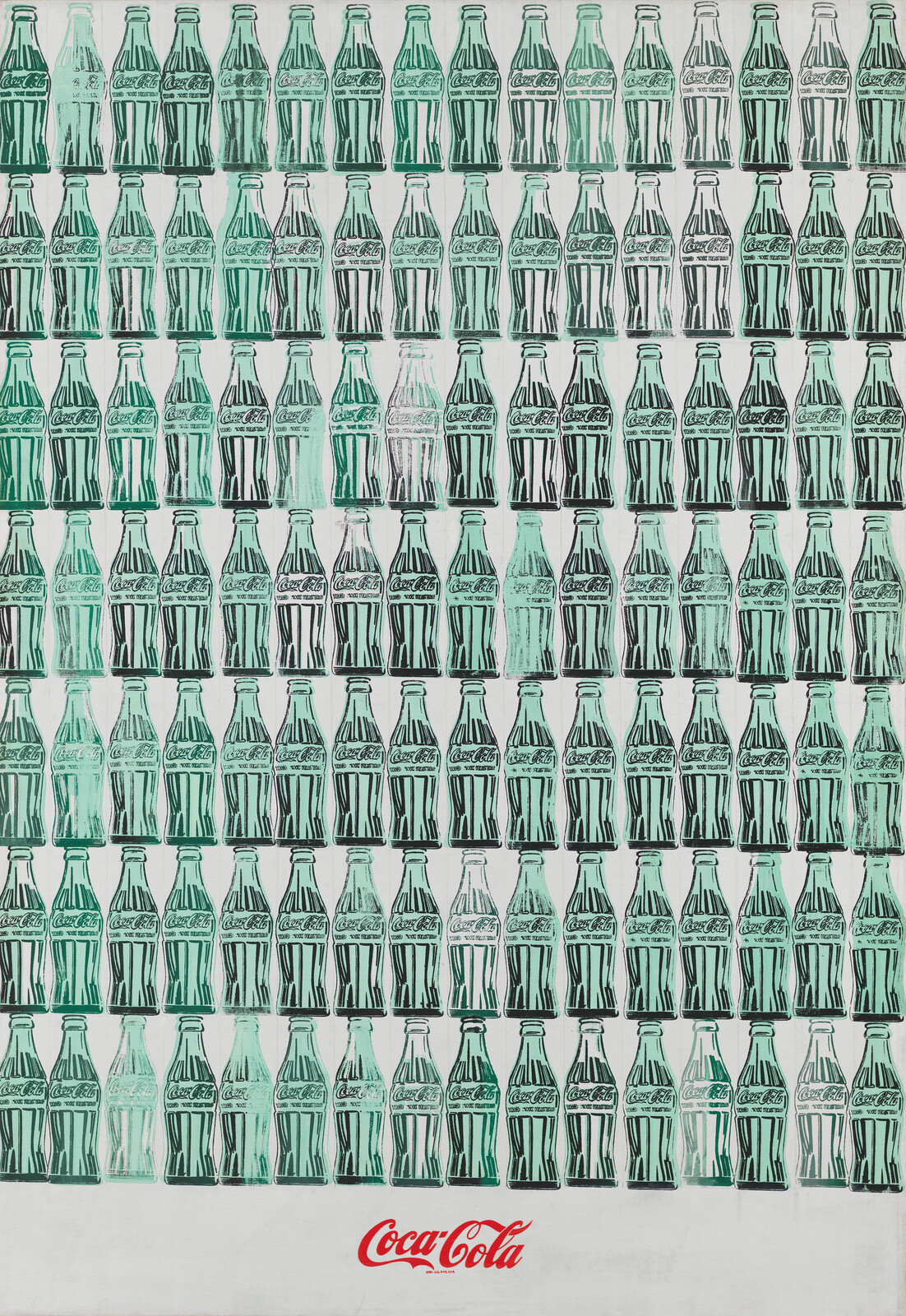
The New Coke

Andy Warhol, Green Coca-Cola Bottles, 1962

Duchamp had shown the way, but his readymades remained for a long time quarantined within the ambit of Dada. With Warhol, the integration of the artist into the market becomes overt: “Making money is art, and working is art and good business is the best art.” From this point on, the untenable model of the avant-garde artist operating on or outside the margins of society survives only in fantasy. The critics, rightly fearing that in the age of Pop, their hieratic expertise was becoming irrelevant, did their best to ironicize Warhol’s perfectly explicit celebration of crass consumerism. Intuitively grasping the logic of commodity fetishism, Warhol produced work whose allure proceeded directly from its vacuity. Precisely because nothing dumber could be imagined, his deadpan appropriations instantly became a gift to hip snobbery.

Photography had threatened to make even the most uncommon objects common, at least as representations. Warhol turned this photographic devaluation of the uncommon on its head. He was able to turn the most debased photographic representations into objects of uncommon consumption. Cans of soup, bottles of Coke, the over-familiar image of Marilyn, all these and others became superlative luxury items via the magic of Factory recycling as provocative art.

Warhol was famous for saying that he made a painting of Coca-Cola bottles because the popular drink was something that he and the queen could equally enjoy. He left unsaid that after the transformation of Coke into Coke Art, only royalty could afford what he was selling. High and low, art and groceries, remained as far apart as ever but the cultural elite could now enjoy a new commodity called irony. 
Readymade Form

Duchamp’s readymade brings into view an overlooked implication of the formalist orientation toward pure form: the possibility, henceforth, of apprehending all objects, including the objects of mass production, as pure form. This happened around the same time that the Futurists were proposing that the acme of modern beauty is the machine. For the Futurists this mostly meant the displacement of traditional subject matter by depictions of force and speed. Duchamp took the decisive step of replacing depiction by appropriation. In so doing, he forced upon “fine” art a confrontation with its own redundancy as source of formal invention. The readymade proves to have the same formal capability as anything labored over in an art studio. The nominative authority of the artist displayed by the readymade is in itself of trivial importance. A greater significance of the readymade is its revelation of the unintended consequences of the modernist fixation on form.

Customized Identities

The current fetishization of identity is an attempt to replace by self-nomination what used to be assigned by fate, caste, and tradition. It is a poor replacement, as evidenced by the violence with which self-authored identities need to be relentlessly asserted.

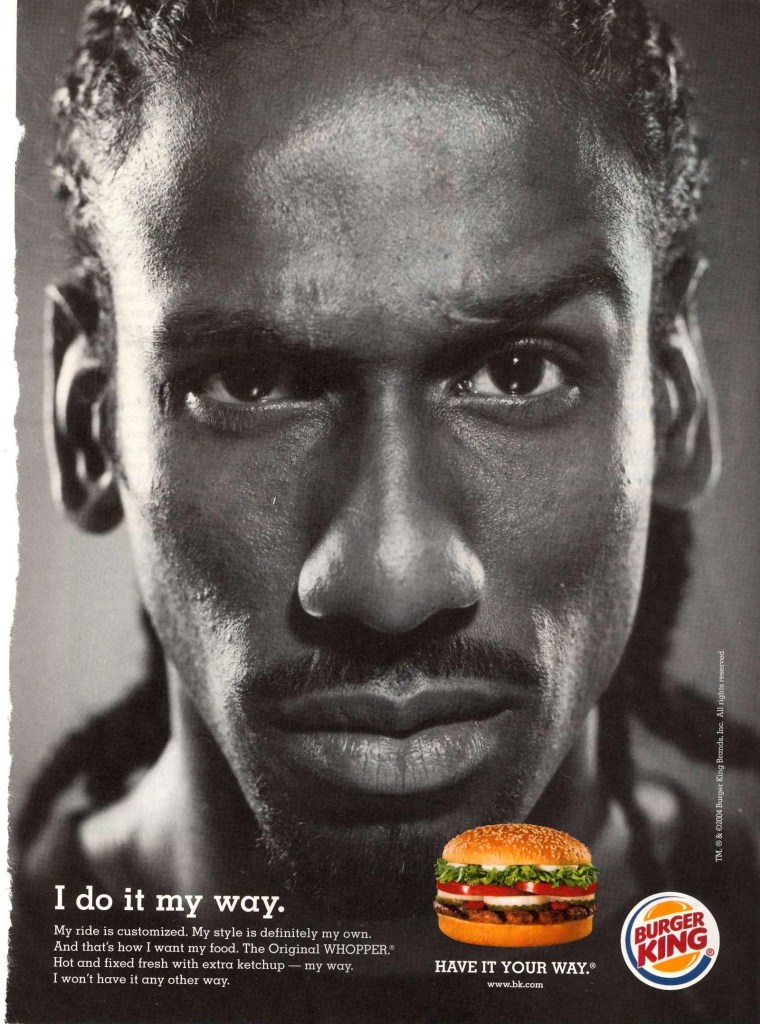
This obsession with identity and identity-based clustering is often interpreted as a new tribalism, but that analogy does not bear examination. In the tribal unit, identity is bestowed by the tribe and requires the subjugation of the individual to whatever shared myth constitutes the group’s symbolic order and rituals that sustain it. In contrast, self-declared, voluntary identities are always staged as resistance to subjugation. Nothing could be more removed from the spirit of tribalism and its reverence for tradition and ancestral authority than this childishness. Tribal societies do not tolerate perpetual adolescence. That’s why they have initiation ordeals. In the premodern tribal context, subjugation is a passage, an opportunity for the unformed subject to gain the form of a worthy member of the tribe. Tribes are not confederations of never-finished, self-assembling subjects all clamoring for recognition. That idea of a made-to-order self only prevails in an environment where consumerism has installed the notion that the self is yet one more customizable consumer good.

The truth is that the contemporary obsession with identity is an indication of its contemporary unachievability. Identity cannot be self-conferred. It has to be imposed by an external agency so as to be experienced as the inescapable contour of one’s being. Identity has to come from the Other. It has to be the consequence of an irrevocable subjugation. But modernity has made subjugation intolerable. It has encouraged and preyed upon the fantasy of heroic self-possession, which consumerism exploits by offering an endless array of purchasable signifiers that promise to give you who you really are, each one of which turns out to be as inadequate as the previous.

Scroll to Top