The Prison of Rights

“Initiation usually comprises a threefold revelation of the sacred, of death, and of sexuality.” (Mircea Eliade, The Sacred and the Profane)The initiate emerges from the initiating mysteries as one who knows. 

The symbolism of death and (re)birth figures prominently in these mysteries. The initiatory ordeals impress upon initiates the import of coming to age and gaining admission into a society of recognized adults. The painful ordeals make the passage an indelible experience but also convey the existential weight of the secret knowledge that is revealed to the initiate. Knowledge of what is vital is knowledge of pain but also knowledge of the ability to surmount pain and deprivation. Thus the initiate gains both self-confidence and pride in tribal fellowship. The necessary subjugation that forges fully formed subjects is not left to chance.

In a desacralized society, the symbolism of death and birth is unavailable, as is symbolism in general, and rites of passage no longer exist. This leaves each individual to “choose” his or her own identity, now extended to the right of each individual to declare their gender identity. Because these identities are self-conferred with no travail they carry little weight and are as easily cast off as they are put on. Under these circumstances, identity never amounts to anything more than an attitude and one never attains the position of one who knows. One remains a perpetual infant, not to say an embryo, arrested in a lifelong condition of insecure identity, anxiety, and bewilderment. The young are formally enjoined to “grow up” but they are immersed in a disorder that they do not have the means to escape. Their “rights” confine them for a lifetime in a larval stage of boundless but never realized potential.

Religious man conquers the fear of death and acquires the ability to live fully and authentically by assigning death the symbolic meaning of passage: initiation kills the profane and unformed man, who is then reborn as consecrated man, free from the fear of death and, therefore, enabled to live a noble life. Uninitiated, irreligious man shrinks from death and is, therefore, condemned to live a cowardly, compromised, senseless half-life.

This has bearing on why the West is at war with itself and takes pride in demolishing its own traditions, canons, and monuments. A desacralized and diminished civilization cannot tolerate the memory of its sacred origin. The legacy of the past becomes an embarrassing encumbrance putting to shame the spiritual poverty of the present.  But the willful erasure of the past does not prevent it from haunting the present. The sacred persists as a haunting, as the always possible undoing of “progress.”
Tripping

The derealization of the world becomes acute from the ’60s onward.

Not because of drug use. Drug use is a symptom of a receding world and of a facile (chemical) attempt to reestablish connection with something beyond trite appearance.

The paradox is that scientific “evidence-based” knowledge diminishes rather than increases contact with reality. When physics supplants metaphysics, the world is emptied of meaning, becomes insubstantial. Science zombifies world, turns it into dead minutiae.

Consumerism turns the world into an array of disposable things and images. Disposability contributes to the sense that “nothing is real.”

Photography and photographic media promise a forensic intimacy with reality but transform reality into fleeting images.

The social sciences demythify the world. This demythified world shatters into fragments experienced in bewildering isolation from each other. (Christopher Nolan’s Memento.)

In this shattered world, “identity” becomes a fetish. 

Unable to participate in a shared, consecrated reality, the postmodern subject becomes a consumer of selfhood, buying into one identification after another and declaring the assortment at every possible opportunity in a frenzy of self-reification. But instead of feeling grounded, this overdefined subject suffers from imposter syndrome. 

The derealization of the world and the self are complementary. They are the two sides of the current mass psychosis.

Customized Identities

The current fetishization of identity is an attempt to replace by self-nomination what used to be assigned by fate, caste, and tradition. It is a poor replacement, as evidenced by the violence with which self-authored identities need to be relentlessly asserted.

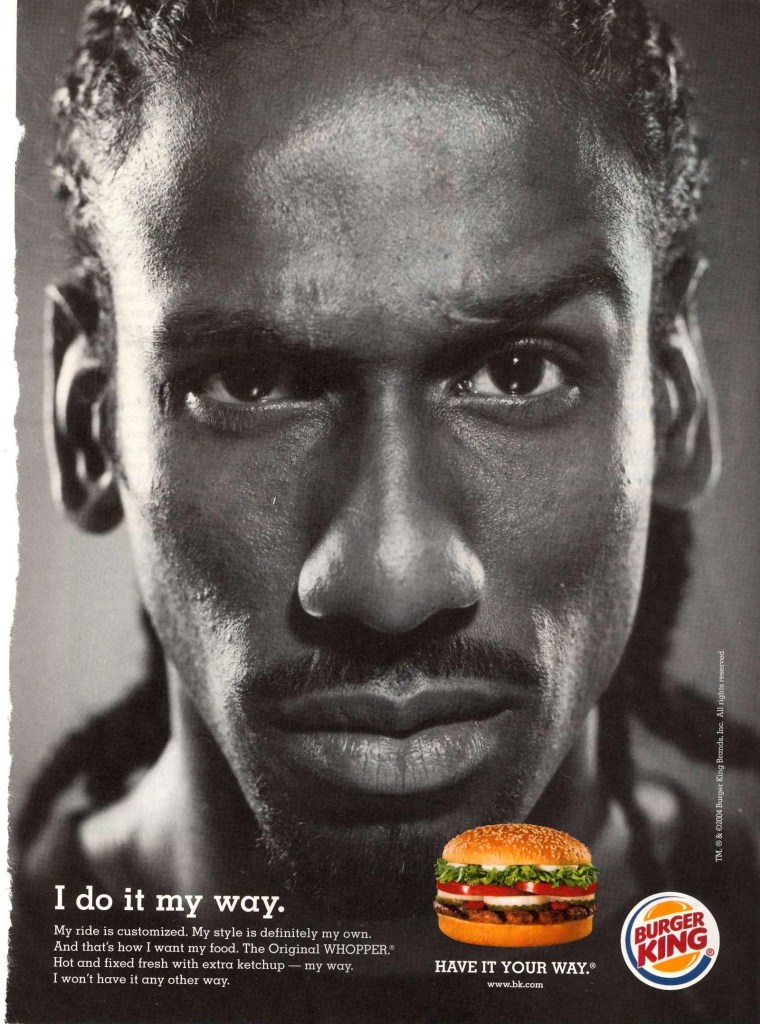
This obsession with identity and identity-based clustering is often interpreted as a new tribalism, but that analogy does not bear examination. In the tribal unit, identity is bestowed by the tribe and requires the subjugation of the individual to whatever shared myth constitutes the group’s symbolic order and rituals that sustain it. In contrast, self-declared, voluntary identities are always staged as resistance to subjugation. Nothing could be more removed from the spirit of tribalism and its reverence for tradition and ancestral authority than this childishness. Tribal societies do not tolerate perpetual adolescence. That’s why they have initiation ordeals. In the premodern tribal context, subjugation is a passage, an opportunity for the unformed subject to gain the form of a worthy member of the tribe. Tribes are not confederations of never-finished, self-assembling subjects all clamoring for recognition. That idea of a made-to-order self only prevails in an environment where consumerism has installed the notion that the self is yet one more customizable consumer good.

The truth is that the contemporary obsession with identity is an indication of its contemporary unachievability. Identity cannot be self-conferred. It has to be imposed by an external agency so as to be experienced as the inescapable contour of one’s being. Identity has to come from the Other. It has to be the consequence of an irrevocable subjugation. But modernity has made subjugation intolerable. It has encouraged and preyed upon the fantasy of heroic self-possession, which consumerism exploits by offering an endless array of purchasable signifiers that promise to give you who you really are, each one of which turns out to be as inadequate as the previous.

Scroll to Top