Numinous Primitivism
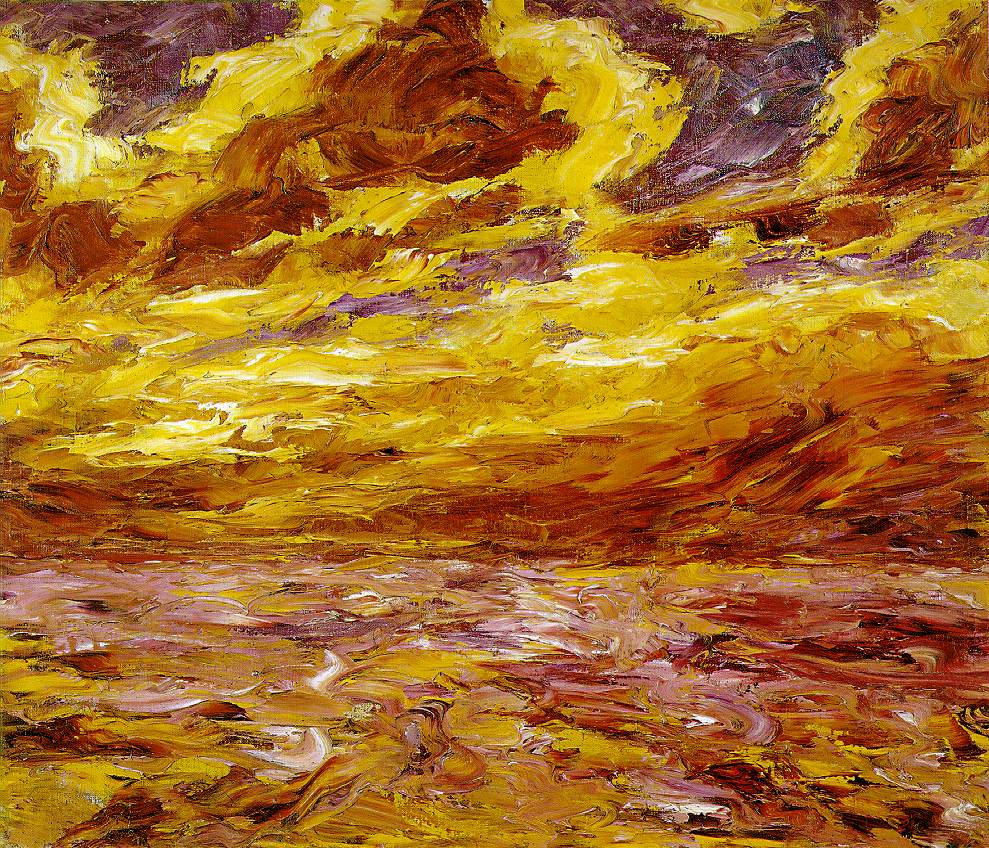
Emil Nolde, Autumn Sea, 1910

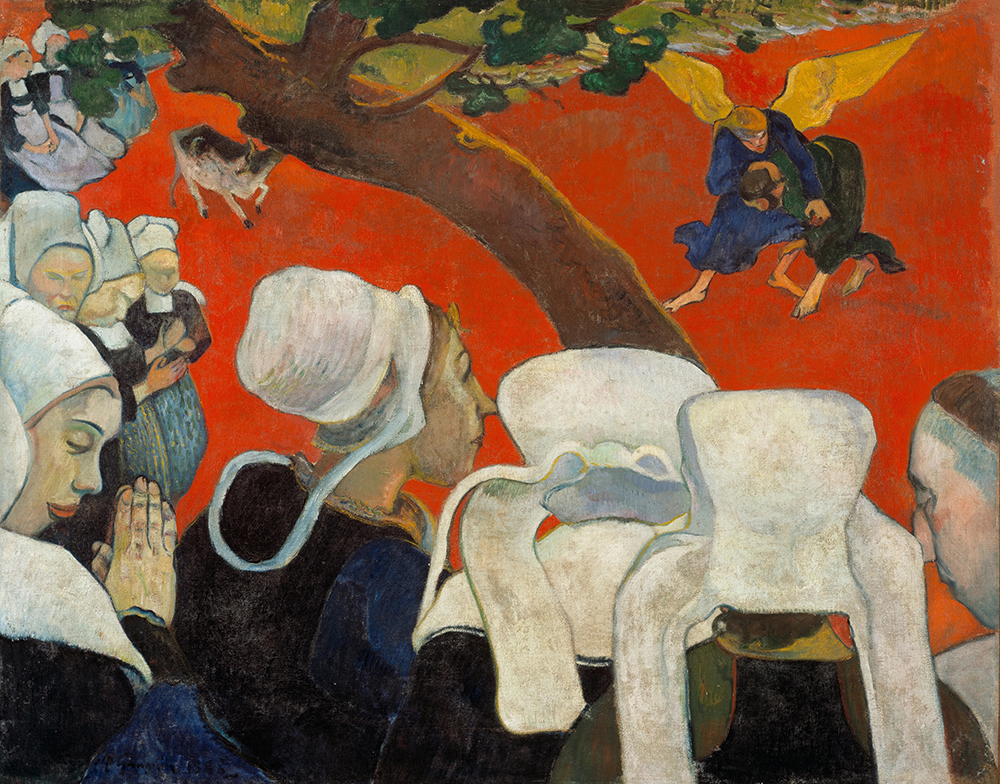
What Nietzsche called the death of God resembles what Mircea Eliade described as the recession of a once actively present god into a distant and indifferent one, a deus otiosus. In polytheistic cultures, the typical remedy for this development was to supplement the Great Father with lower and, therefore, more supplicable specialized deities and demiurges. Monotheistic Europeans did not have this option, so those who craved numinous contact, not least artists, responded either by seeking out and reclaiming the residues of earlier forms of Christian piety or by appropriating what they thought were the more magically potent gods of the recently colonized “primitives.” Gauguin did both, first by going to a corner of Brittany still steeped in medieval belief and color and then on to a Tahiti haunted by pre-Christian deities and spirits.

The current overly moralistic, priggish assessment of primitivism cannot erase the fact that it gave access to what was probably the last store of vitality in a moribund European civilization poisoned and degraded by the very modernity it had brought into being. It restored to European art a visionary capability that yielded fresh visions of heaven and hell, which are the two sides of ecstasy. And in so doing, it briefly gave back to art its highest purpose, which has always been and always will be to give symbolic form to what cannot be adequately encompassed by physical form.
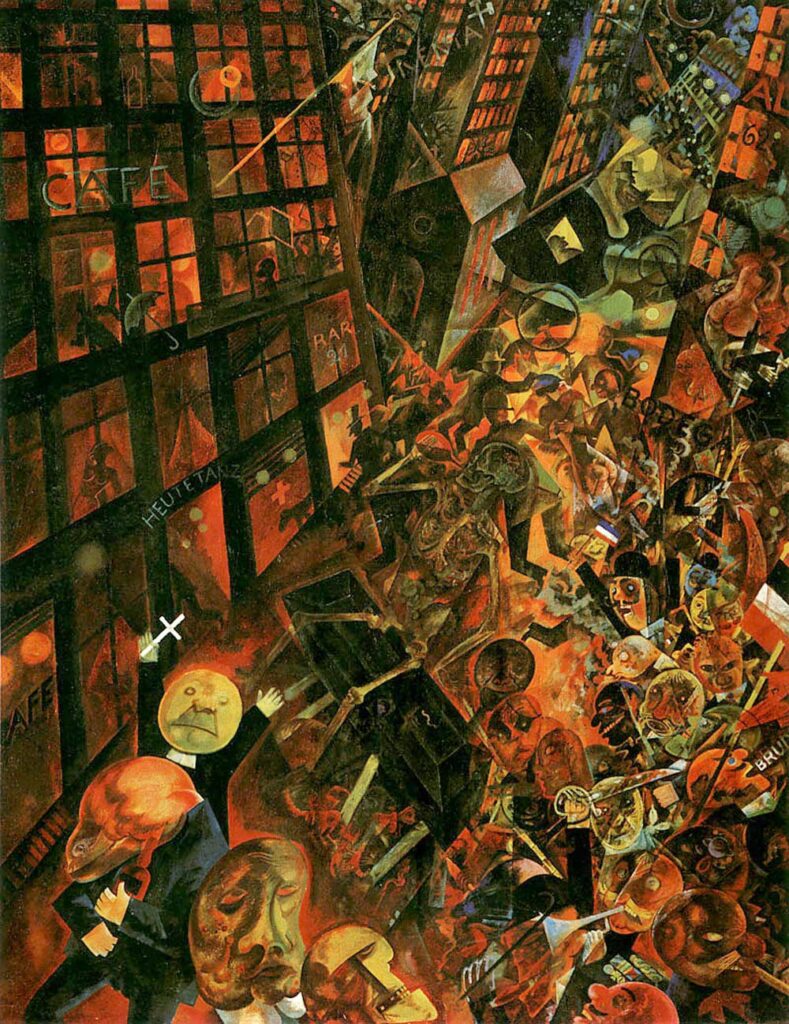
George Grosz, The Funeral (Dedicated to Oskar Panizza), 1917-18

Primitivism’s Shortcoming

Paul Gauguin, Vision after the Sermon (Jacob Wrestling with the Angel), 1888

The energy of the sacred is dissipated when the sacred is aestheticized and becomes mere object of beauty or “expressiveness.” This is why moderns could not derive more than shallow inspiration from “primitive” (i.e. sacred) art.

The sacred is a revelation of an absolute truth and an absolute reality.

Modern art, despite being sensitive to (and envious of) the power of the sacred object, is too preoccupied with subjective feeling and the expression of individual vision to be satisfied with the seemingly passive (and repetitive) affirmation of eternal truths. So while it may emulate the superficial mannerisms of sacred art, modern art cannot achieve the tranquil and implacable conviction in the reality of the unseen that is the foundation of sacred art. 

Gauguin might have admired the piety of Breton peasants but he could not become one of them; he could not enclose himself in the tight confines of their faith and their world. To do so, he would have had to forfeit his precious modern “creativity.” He would have had to withdraw not merely from France but from modern art altogether, indeed, from art itself given the impiety of the concept when art is no longer understood as sacred service.

All of which is to say that modernism, despite its anxieties about modernity, could not overcome what was modern in itself. The concept of and practice of submission, so fundamental to Islam but underpinning all sacred traditions, is alien to modernism. The modernist ethos is Promethean; its restlessness is satanic. 

No authentic spirituality comes from rebellion because sacred inspiration is available only to those who have achieved receptiveness through the practice of humility. The modernist artist aspires not to worship but to emulate God’s creative power. Thus, even when he wants to be “spiritual,” he is aligned with tendencies that are anti-spiritual. Instead of reinventing the sacred, modernist art itself became one of the symptoms of its abolition, one of the indicators of modern “disenchantment.”

Scroll to Top